From fine, silky fibres to strong, versatile fleeces, British sheep breeds produce an incredible variety of natural wool and fibre. Here we explore different sheep breeds and the unique characteristics of their fleeces, including fibre type, texture, colour, crimp and common uses. Whether you’re a spinner, hand knitter, fibre enthusiast or simply curious about where our Blacker Yarns wool comes from, discover the fascinating facts behind many of the sheep and their fleece/fibre that make each yarn range so special.
- Blue-faced Leicester
Originally concentrated in the north of England and known as the Hexham Leicester, this breed is a big, tall sheep with a very fine long fleece, hanging distinctively in individual neat locks with a tiny crimp. It has no wool on the head and lefts, virtually none on the belly and and does not have the top-knot or fringe typical of the Leicester breed. They are creamy white, with grey skin on the head, hornless with a long tail. Find out more about them on the UK breed society website: www.blueleicester.co.uk. Blacker Yarns ranges that contain BFL include:

- Dohne Merino
This hornless breed with its pure white, fine wool originated in South Africa and can now be found in New Zealand, Australia and the Falkland Islands. The original breed was Corriedale, but increasingly Merino is being used. The Corriedale, developed largely in Australia and New Zealand, is the oldest cross breed of them all coming originally from breeding Lincoln or Leicester rams with Merino ewes. Adding Merino from Australia or South Africa produces a lovely, white, fine and crimpy yarn soft enough to wear next to the skin. We source this type of Falklands wool from a single farm and flock to make our Blacker Swan.

- Gotland
This Swedish breed developed on the island of Gotland over 1,000 years ago, and were originally imported to Scotland. Gotland sheep are short-tailed, grey with occasional white markings, black heads and legs and hornless. Their wool comes in a variety of greys from silver to charcoal, and the texture is so light it can be similar to that of a fine mohair. It is very fine, long and lustrous with a wavy, even curly crimp. For more information visit the British Gotland Sheep Society. Our Pure Gotland DK yarn is made from this fibre.

- Jacob
There is only one truly and distinctly spotted sheep, and that is the primitive, black and white Jacob. They have a characteristic white blaze on the face and often dark patches at the front rather than the back. They have 2-6 horns, and are claimed to have originated in Mesopotamia in biblical times, taking its names from Jacob in the Old Testament. They are a minority breed but not rare in the UK. We source this type of Jacob fibre to produce our Pure Jacob on Cone. Image credit: Bedales school

- Ouessant
This is a delightful French breed that takes its name from the island sitting 12 miles off the westerly point of Brittany, Ushant. As the ram’s shoulder height reaches just 48-50 centimetres (19 inches) and the ewes 45-46 centimetres (17-18 inches), the breed is smaller even than the British Soay and is said to be the world’s smallest. For more information visit the Ouessant Sheep website. We source this fibre to make occasional batches of Ouessant Yarn on Cone. Image credit: Renee Hemming, ouessant ramling.
- Romney
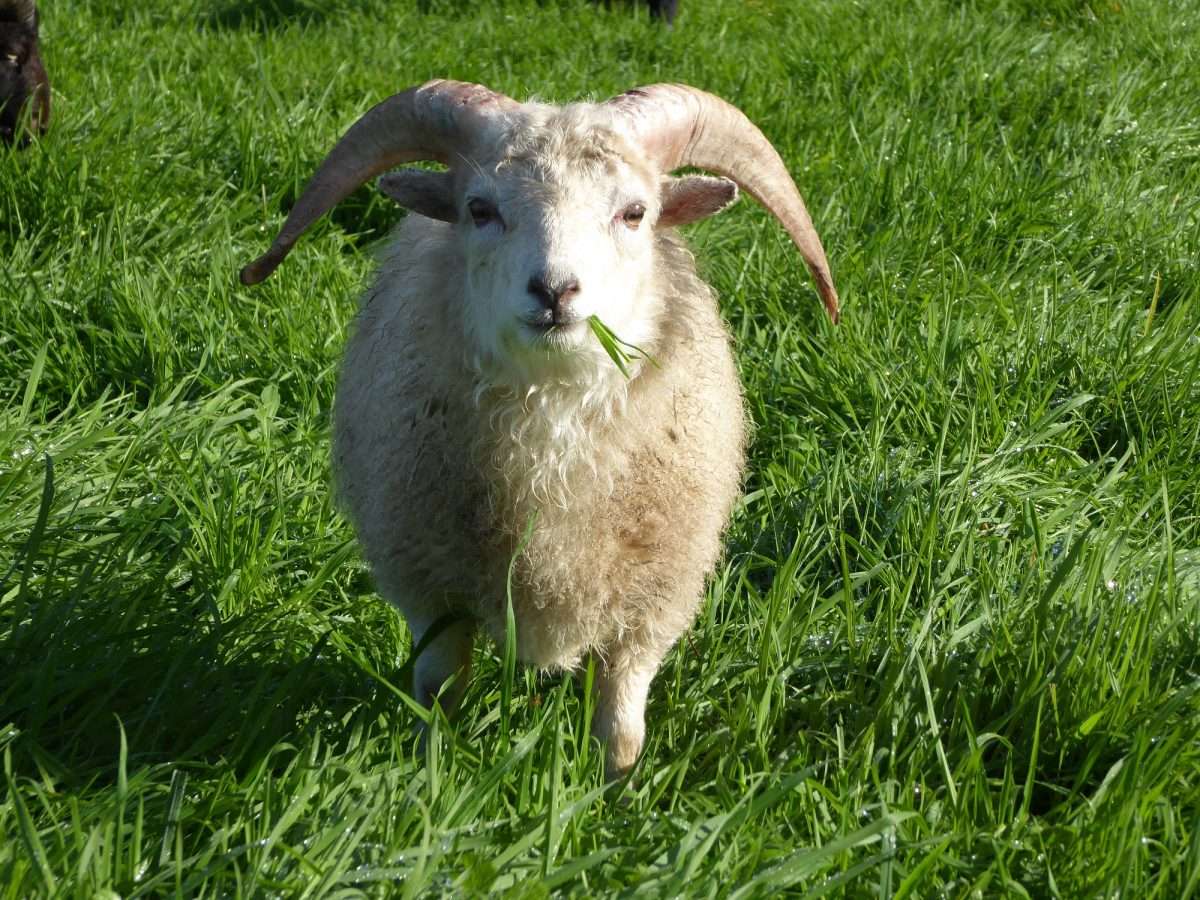
Dating from 1895, this is the one of the oldest breeds in the UK. Surviving in the Romney Marshes has given these sheep superb feet, and they have been used in cross breeding all over the world. The fleece is fine and lustrous with a pronounced crimp which produces excellent, beautifully soft, woollen yarn. Find out more about them on the UK breed society website: Romney Sheep Breeders Association. We source this type of Romney fibre to make our Pure Romney Guernsey 5-ply yarn. Image credit: Penny’s Romney flock

- Ryeland
A native breed, Ryelands are small with dense, short, white fleece, slightly compact and tubby in appearance. They are hornless with short woolly legs, dark feet and have a teddy bear look. Specifically developed in the 12th century by the monks at Leominster near Hereford, to make fine wool for cloth and were used to graze land where rye was being grown, to stimulate growth, hence the name Ryeland. We source this fibre for our Coloured Ryeland Mixed DK. Image credit: Philip and Val, Emborough Farm.

- Shetland
This primitive breed has evolved to survive the harsh environment of the islands where they have traditionally been farmed. Shetland wool is either from the breed, from sheep farmed on the Shetland islands or both. It is one of Britain’s smallest sheep and the rams usually have curling horns, whilst the ewes do not. Each colour and marking pattern has its own Norse name. Visit the UK breed society to find out more: Shetland Sheep Society. Blacker Yarns ranges that contain Shetland include:



 Verified owner